Since 1984
Pasadena, CA
Since 1984
Pasadena, CA
How to Choose
the Right Filtration
Capacity for Your Home
It's about fit, not force.
Choosing a whole house water filtration system isn't just about removing contaminants, it's about ensuring the system can handle your household's water demands over years, not months.
 Since 1984
Pasadena, CA
Since 1984
Pasadena, CA
 IAPMO Certified
NSF/ANSI Standards
IAPMO Certified
NSF/ANSI Standards
 Factory Direct
Professional Install
Factory Direct
Professional Install
What "Filtration Capacity" Actually Means
When shopping for a whole house water filter, three terms are often confused. Understanding the difference helps you make a better long-term decision.
Capacity
Total gallons the system can treat over its lifetime. This determines how long the system lasts before replacement.

Flow Rate
Gallons per minute (GPM) - how fast water moves through the system at any given moment. Affects water pressure during simultaneous use.

Quality
What contaminants the system removes. A high-capacity system that does not address your specific water concerns is not the right fit.

What is Capacity?
Capacity is how much water a system can treat over time. Higher certified capacity means longer effective performance before the filtration media is exhausted. Look for certified claims (IAPMO, NSF) over marketing assertions - certified capacity is independently verified, not manufacturer self-reported.


Water Main Size & Plumbing Configuration
The size of your water main and how your plumbing is configured directly affects which system will perform well in your home. Installing an undersized system creates a pressure drop you will notice every time multiple fixtures run at once.

Number of Bathrooms & Fixtures
More fixtures mean higher simultaneous demand. A 4-bathroom home with multiple showers running at once needs both adequate flow rate and sufficient capacity to handle daily volume.

Water Source
City water and well water have different treatment needs. Well water often contains higher levels of sediment, iron, bacteria, and other contaminants - requiring more thorough treatment and potentially higher-capacity systems.

Long-Term Ownership Plans
A higher-capacity system costs more upfront but avoids early replacement and delivers better lifetime value for long-term homeowners.
Why Capacity Matters Over Time
Filtration systems do not fail suddenly - they gradually lose effectiveness as the filtration media is exhausted. Understanding this helps you avoid a common mistake: buying a system for today without planning for the years ahead.
- Systems gradually lose effectiveness as filtration media is exhausted
- An undersized system may require early replacement or deliver declining performance within years
- Certified high-capacity systems reduce future disruption - fewer replacements, fewer service calls
- Higher upfront investment in capacity often means lower lifetime cost

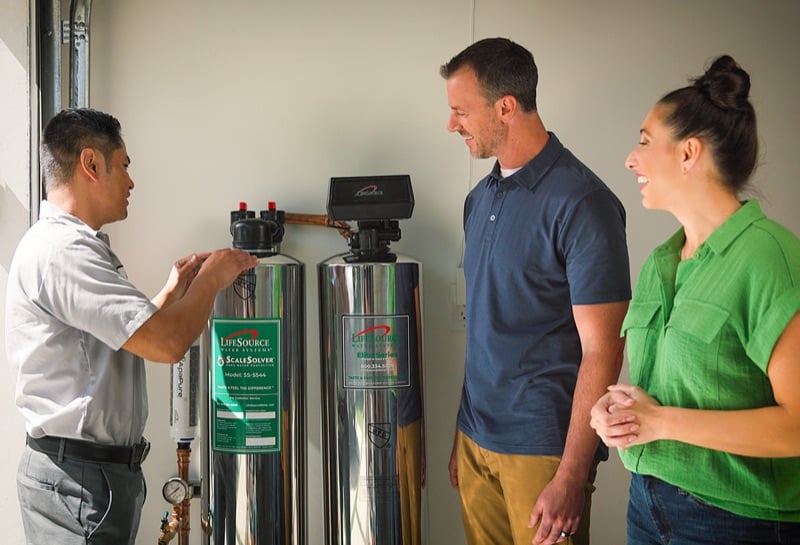
LifeSource systems are IAPMO certified to 2.2 million gallons.
This is not a marketing estimate - it is an independently verified, third-party certified performance rating. Most households will not approach that threshold for 10+ years, making it a genuinely long-term solution.
How LifeSource Approaches Capacity Planning
Built for the Long Term - Certified to Prove It
LifeSource does not size systems by square footage or make uncertified claims. Every system is sized based on real household usage patterns, and certified capacity is independently verified - not manufacturer-estimated.
 No Filters to Replace
Factory Direct Installation
No Filters to Replace
Factory Direct Installation
When LifeSource sizes a system for your home, the assessment accounts for household size, water source, fixture count, and how you use water day to day. The same team that installs your system supports it for the long term - there is no third-party service chain.
Get Expert Capacity Planning for Your Home
A free LifeSource assessment takes the guesswork out of sizing. We will evaluate your household, water source, and goals to recommend the right system - with no pressure and no obligation.