How Whole House Water Filters Work
Built to work, and work everywhere.
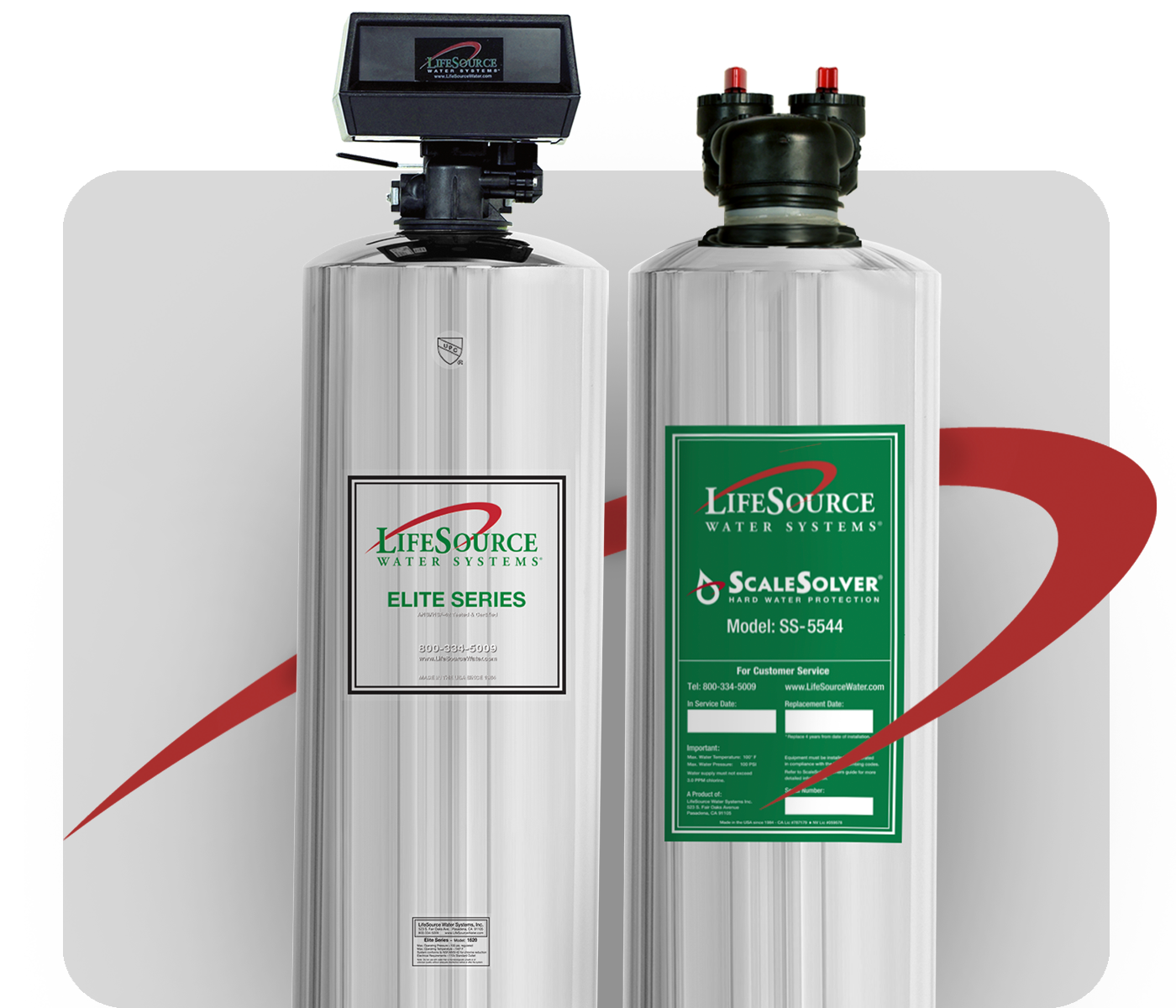
Rather than relying on filters at individual taps, whole house water filters treat water at a single point before it flows through the home. LifeSource combines carbon filtration, salt-free conditioning, and bacteria disinfection to support long-term water quality and infrastructure protection.
 NSF/ANSI Certified
 Low Maintenance
 Made in Pasadena, CA
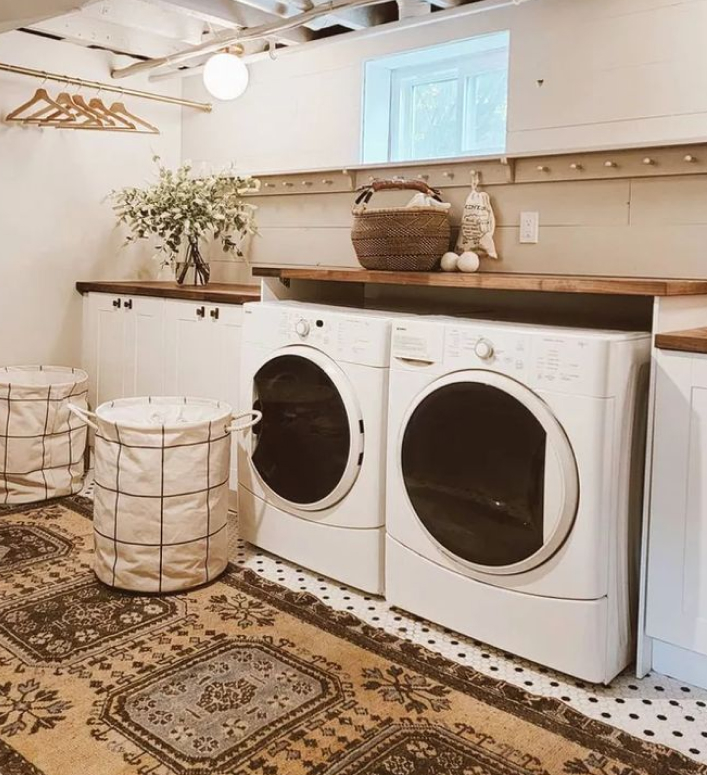
The Main Water Line Connection Point
Whole house water filters are installed at a single, centralized location—your home's main water line—where they integrate directly into your plumbing and operate automatically.
Most systems require approximately 2' × 4' of accessible space near the main line and treat all incoming water without the need for separate filters at individual taps.
- Garage (common in newer homes)
- Basement (older homes / cold climates)
- Side of the house, utility or mechanical room
- Crawl space (case-by-case)
 Garage (common in newer homes)
 Crawl space (case-by-case)
*The exact location depends on your home's layout, plumbing access, and local conditions.
How Do Whole House Water Filters Work
LifeSource systems combine up to three stages of treatment—each addressing a different water quality concern—in a single, integrated unit installed at the main water line.
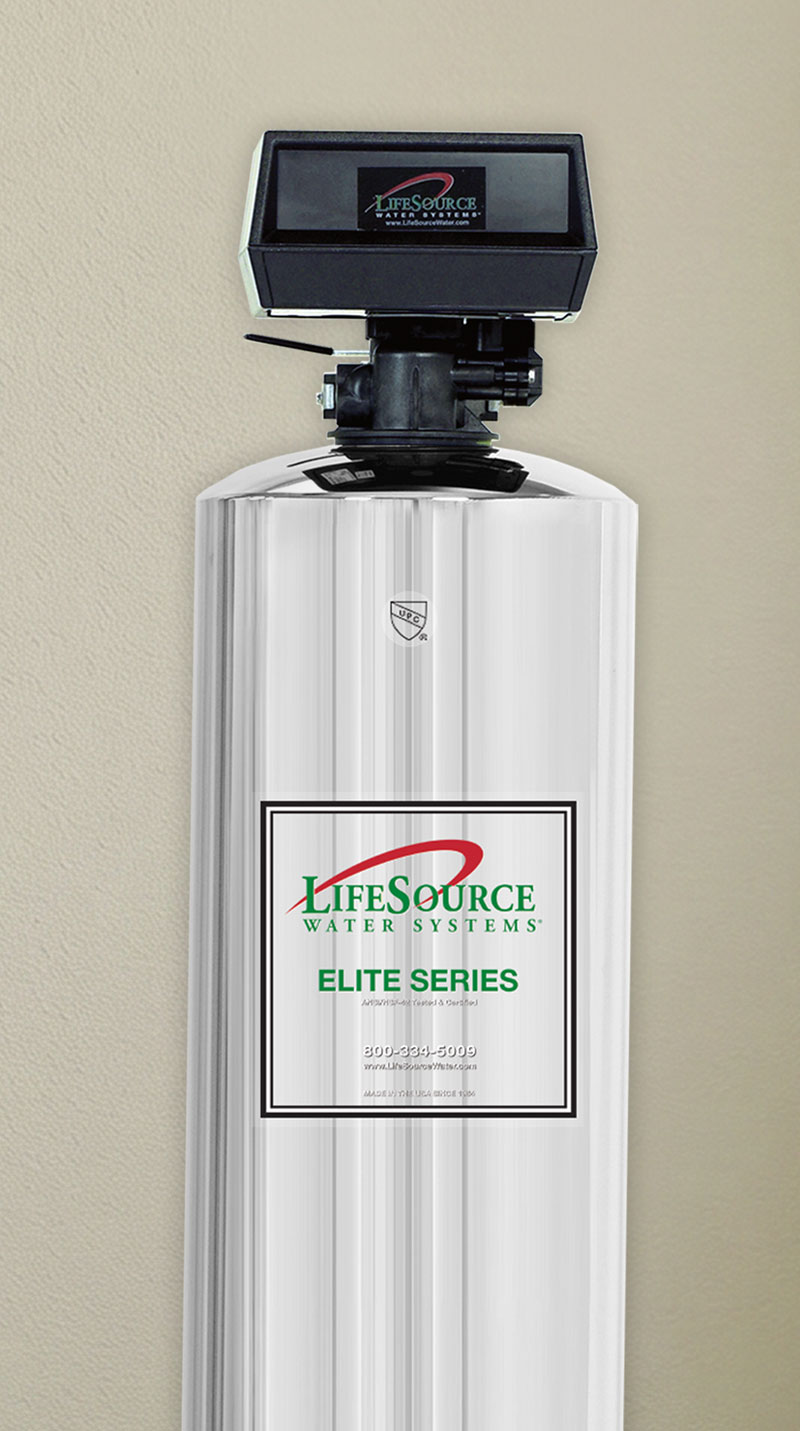
STAGE 1
Carbon Filtration
The first stage focuses on improving overall water quality by reducing contaminants that affect taste, odor, and everyday use throughout the home.
LifeSource systems use granular activated carbon (GAC) made from coconut shells, a premium filtration media known for its large surface area and contaminant reduction capacity.
This stage helps reduce:
- Chlorine and chloramines (used in municipal disinfection)
- Taste- and odor-causing compounds
- Volatile organic compounds (VOCs)
- Pesticides and herbicides
- Sediment, rust, and particulate matter
How the filtration works:
Activated carbon contains microscopic pores that attract and bind contaminants as water flows through the media. Effectiveness depends on media quality, volume, and contact time—factors LifeSource systems are engineered to balance without reducing water pressure.
Why GAC is used:
LifeSource filters feature a proprietary blend of coconut shell granular activated carbon. It effectively reduces the objectionable taste and odors of chlorine without adding anything to your water.
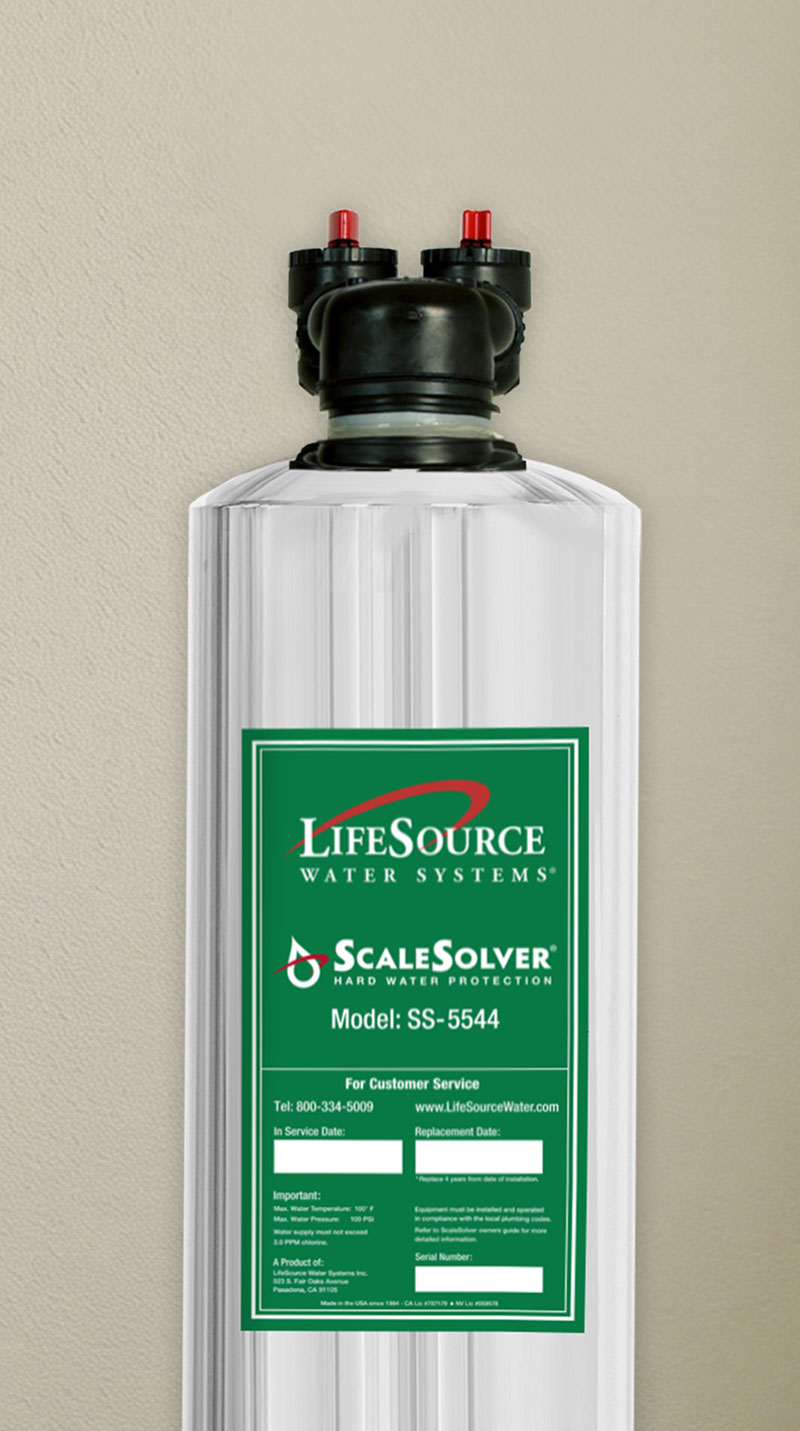
STAGE 2
Salt-Free ScaleSolver
After filtration, water moves through our proprietary ScaleSolver technology to address scale caused by hard water minerals.
Hard water contains dissolved calcium and magnesium. Rather than removing these minerals, our ScaleSolver changes how they behave as water moves through your plumbing.
What happens during salt-free conditioning:
- Minerals interact with microscopic template surfaces
- They form stable, neutral crystals
- These crystals remain suspended in water
- They pass through pipes without attaching to surfaces
- Sediment, rust, and particulate matter
Conditioning vs. traditional softening:
- Softening removes minerals and replaces them with sodium
- Salt-free conditioning leaves minerals intact but non-scaling
- No salt bags, wastewater, or ongoing maintenance
Why this design matters:
- By retaining minerals while preventing scale, ScaleSolver supports plumbing and appliance longevity without altering the natural character of your water.
STAGE 3
Bacteria Disinfection
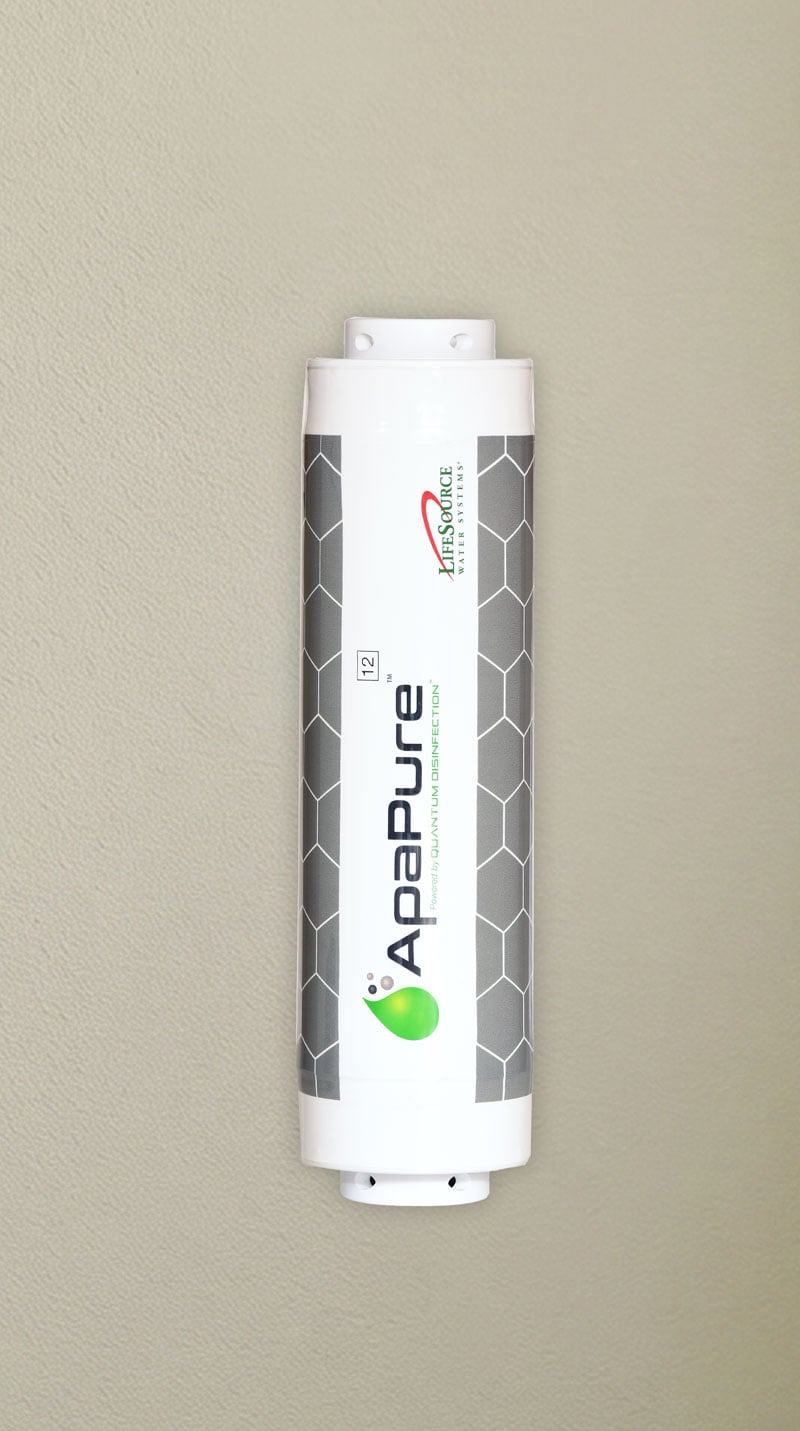
For homes that need added protection, LifeSource offers integrated bacteria disinfection as part of the Ultimate Protection Package. The ApaPure® system uses Quantum Crystals Media™ to neutralize microorganisms on contact.
The system operates without power or chemicals and requires replacement every 2 years to maintain effectiveness.
What Quantum Crystals does:
- Collapses microorganism structure through electronic exchange
- Prevents bacteria and viruses from reproducing
- Provides chemical-free, power-free disinfection
Commonly neutralized organisms include:
- Bacteria (E. coli, Legionella, Salmonella)
- Viruses
- Protozoa (Giardia, Cryptosporidium)
When bacteria protection is recommended:
- Well water without municipal disinfection
- Homes with surface-water influence
- Added protection for immunocompromised households
- Areas with natural disasters causing boil notices
How Whole House Water Filters Are Sized
Every home uses water differently, and your system should be designed to match that.
LifeSource systems are sized based on:

Household size & typical water use

Number of bathrooms & major appliances

Required flow rate (gallons per minute)

Incoming water pressure & local conditions

Water quality & hardness levels

Water main size and plumbing setup
The result is filtered water that moves easily through your home, even during peak use.
Installation Requirements
and Best Practices
LifeSource systems are installed by our own trained technicians who manage the process from start to finish, ensuring your system is set up correctly and performs as intended.
Installation is completed in a single visit, usually taking 2-5 hours. The system arrives directly from our Pasadena, CA factory, pre-assembled and tested, is connected directly to the main water line, and all connections are pressure-tested for reliability.

Before installation, we review:
- Main water line location and access
- Available space for system placement
- Plumbing configuration and flow considerations
- Electrical access
During installation, we handle:
- Direct connection to the main water supply
- Pressure testing of all fittings
- Water quality checks before and after setup
- A walkthrough of the system and what to expect
After installation, documentation is provided, along with clear support information. Ongoing maintenance requirements are minimal by design.

Professional Installation
- Installed by LifeSource-trained technicians, or approved subcontractors
- Connected at your home's main water line
- Completed in a single visit
- Includes system setup, flow testing, and a walkthrough before we leave
Minimal Ongoing Maintenance
- Designed for years of use - Certified for 2.2 million gallons or up to 10 years on our carbon system.
- No regular filter changes or ongoing maintenance required
- No routine service schedules to keep track of
- Runs quietly in the background once installed
Long-Term Warranty & Support
- Rated for 3x longer than any competitor
- Backed by a 10 year warranty on stainless steel tanks and major components
- Serving customers across the US, with specialized installation teams in CA, TX, AZ, and NV
Real Results from Real Homes
Families across the country describe the same shift: They stop thinking about their water.

"After researching every option, LifeSource was the clear choice. No maintenance, no salt, and the water quality is noticeably better throughout the whole house."

"The guide helped us understand exactly what we needed. The consultation confirmed it. Installation was seamless and we haven't had to do a thing since."

"I compared five different systems. LifeSource was the only one that matched every factor in the buyer's guide checklist. Two years in and still zero maintenance."
Ready to Protect Your Entire Home?
Start with a system designed around your water and the way your home uses it.