Buyer’s Guide: 7 Questions to Ask Anyone Selling You a Water System
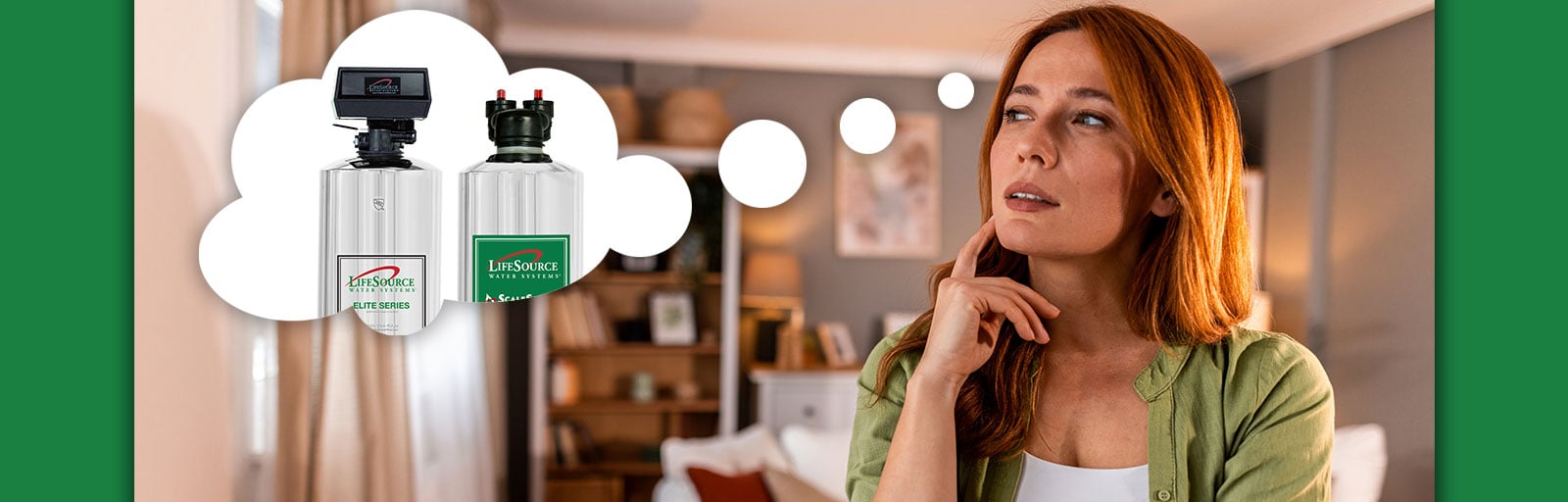
Homeowners tell us the same thing almost every day: shopping for a water system is confusing. New companies enter the market all the time, every website promises the best water in the world, and from the outside, nearly every tank looks the same. The differences are inside: what filtration media it holds, who built it, and whether an independent lab ever tested it as a whole system.
We've been building these systems since 1984, so we have a point of view. But this is a purchase you'll live with for ten years or more, and whoever you end up buying from, we want you to buy well. The seven questions below will settle it in one visit, with any company. Including us.
1. What do I actually need: softener, point-of-use, or whole-home?
Before anyone quotes you a price, it helps to know what you're shopping for. Water treatment products fall into three categories, and they do different jobs.
- A water softener treats hard water and nothing else. It works by exchanging the calcium and magnesium in your water for sodium, and it runs on bags of salt for as long as you own it. It does not filter the water you drink. One more thing worth knowing before you buy: a growing number of California communities have banned or restricted new salt-based softeners because of the salt they discharge into the wastewater system. Learn more about salt bans here.
- A point-of-use filter, like a reverse osmosis (RO) unit under the kitchen sink, produces highly purified water at one faucet. The process also reduces the water's natural mineral content, including calcium and magnesium. Every shower and every other faucet in the house gets untreated water, and the filters need replacing every 6 to 12 months, the membrane every 2 to 3 years. An RO at the kitchen sink is a fine addition to a whole-home system. It is not a substitute for one. Learn about the LifeSource Water reverse osmosis system here.
- A whole-home system treats water at the single point where it enters your house, so every tap, every shower, and every appliance gets the same filtered water. A good one reduces chlorine taste and odor throughout the home. Filtration alone does not address hard water, which is why some companies, including us, pair it with salt-free scale prevention like our ScaleSolver, which has been independently tested to prevent up to 99.6% of new scale formation.
Why this matters: these three products solve different problems at very different price points. Knowing which one is on your quote is how you avoid paying for the wrong thing, or paying twice. If a quote covers one faucet, ask what the rest of the house is supposed to do.
Once you know which category you're shopping in, our homeowner's guide to choosing and sizing a system walks through the technical side: flow rates, household size, and matching a system to your water quality.
2. Is the system certified as a complete unit, and is it publicly listed?
Quality standards matter most for the products you can't judge by looking at them, and a water system is exactly that. So here's context most buyers never get.
NSF/ANSI standards are national quality and safety benchmarks for water treatment: what the materials are made of, whether anything harmful leaches into the water, and whether the product does what the label says.
Independent organizations test products against those standards, and you already trust these organizations, even if you don't know their names. NSF is the certifier behind the blue mark on commercial kitchen equipment; health departments generally require it before a restaurant can serve you food. IAPMO writes the plumbing code that building inspectors across the West enforce. The Water Quality Association (WQA) is the water-treatment industry's own testing body. When a product passes their testing, it gets listed in a public database anyone can search, and it gets re-checked over time.
Two distinctions matter when a company talks about certification. A certified part is not a certified product; a fitting or a tank can carry a certification while the system as a whole was never tested. And "tested to NSF standards" is not the same as certified; anyone can run their own test and say that.
So ask whether the whole system is certified as one unit, to which NSF/ANSI standard, and by whom. Then look it up yourself.
Why this matters: certification is the one claim in this industry you can verify for free, in about two minutes, without trusting anyone’s brochure. If a product isn’t in the database, ask the company why.
Ours, so you can check: IAPMO listed to NSF/ANSI 42 for chlorine taste and odor reduction (file W-9728) and NSF/ANSI 61 for materials safety (file W-11473). Our RO is certified to NSF/ANSI 58 (file W-14568). Our scale prevention was independently tested at Arizona State University under the DVGW-W512 protocol: 99.6% effective at preventing new scale, with no salt. Verify every line at pld.iapmo.org.
3. Who built the tank, and what filtration media is inside?
Plenty of companies sell tanks someone else built and filled. There's nothing wrong with reselling, but it has consequences you'll live with: the seller may not know exactly what media is inside, may not control its quality, and may not be able to get parts when the system needs service down the road.
Ask who manufactures the system, where, and what filtration media is inside. A company that builds what it sells can answer in specifics.
Why this matters: the media inside the tank is the part doing the actual work, and future service depends on the seller knowing their own product. Clear answers here tell you more about the next ten years than anything on the price sheet.
Ours, so you can check: 41 lbs of pharmaceutical-grade coconut-shell catalytic carbon, certified lead-free (NSF/ANSI/CAN 372). Our flagship 1620S is certified for 2.2 million gallons (NSF/ANSI 42), the highest certified capacity of any whole-home system in North America. Every system is built by hand in the same Pasadena, California factory, as it has been since 1984.
4. What does this cost every year after installation?
For many systems, the install price is not the total price. Ask for the ongoing numbers in writing: salt bags, filter and media changes, re-bedding the tank, service calls. Then count the time alongside the money, because hauling bags and scheduling service visits is part of the cost too.
Why this matters: two quotes that look $1,000 apart on day one can trade places by year five once the recurring costs are on paper. You can only compare systems fairly when you're comparing ten-year costs, not install prices.
5. What does the written warranty actually cover?
The document, not the brochure. See what's actually covered: valves, tank, media, or just the outer shell. Ask whether the warranty requires a paid annual service to stay valid, because some lifetime warranties end the first year you miss a checkup.
Why this matters: the warranty is the part of the sale that decides who pays when something goes wrong in year six. Five minutes of reading now is the cheapest insurance you'll ever get on this purchase.
6. Can I read real reviews and check the BBB rating?
A company with happy customers can point you to hundreds of them, on Yelp, Google, the Better Business Bureau, and their own site. Read a spread of them, including the critical ones, and ask the company to explain anything below an A rating.
Why this matters: you're not looking for perfection. No company is perfect after decades of installs. You're looking at how they behave after the sale: whether they respond, resolve, and stay accountable. A track record across platforms the company doesn't control is very hard to fake.
7. Who installs the system, and who services it later?
A system is only as good as its installation. Ask who does the work: the company’s own licensed crew, or a subcontractor who won the job on price. Then ask the question that matters more: when the system needs attention years from now, who picks up the phone?
Why this matters: the water system business has a lot of resellers and installers who come and go. The company answering your call in year six is only the one that sold it to you if that company builds, installs, and services what it sells, and plans to be around.
Good answers to all seven? Buy with confidence, from whoever earned it.
If some answers were vague, keep shopping. You now know what to listen for.
As for us: we're LifeSource Water. We invented whole-house water systems in 1984 and have built every system by hand in Pasadena since, now three generations in and serving more than 250,000 families.
Ask us all seven of these questions. We'll answer every one, and we'll put our certifications, our warranty, and your quote in writing so you can verify it all before you decide.
See how to get a quote from LifeSource Water
Keep this. Send it to someone shopping.