Water Conditioner vs. Water Softener: What's Actually Different?
Most homeowners shopping for hard water solutions land on one of two options. The difference between them matters more than the marketing usually explains.
What a water softener does
A traditional water softener works through ion exchange. Hard water passes through a resin tank, where calcium and magnesium ions, the minerals responsible for scale, are swapped for sodium ions. The result is softened water: gentler on fixtures, less likely to leave deposits. But the process requires salt, a regular regeneration cycle that flushes the resin tank, and a consistent supply of bags to keep the system running. The water that comes out carries a measurable sodium content.
Softeners work well for some homes, particularly those with very high mineral loads. The question is whether the ongoing commitment fits your household.
What a water conditioner does
A water conditioner takes a different approach. Rather than removing calcium and magnesium, it changes how those minerals behave. Through a process called template-assisted crystallization, the minerals are converted into a stable form that cannot bond to pipe walls, fixtures, or appliances. Scale does not accumulate. The minerals remain in the water but pass through without causing damage.
No salt enters the process. No regeneration cycle. The system installs at your main supply line and treats every water line in the home from a single point.
The key differences

What LifeSource installs
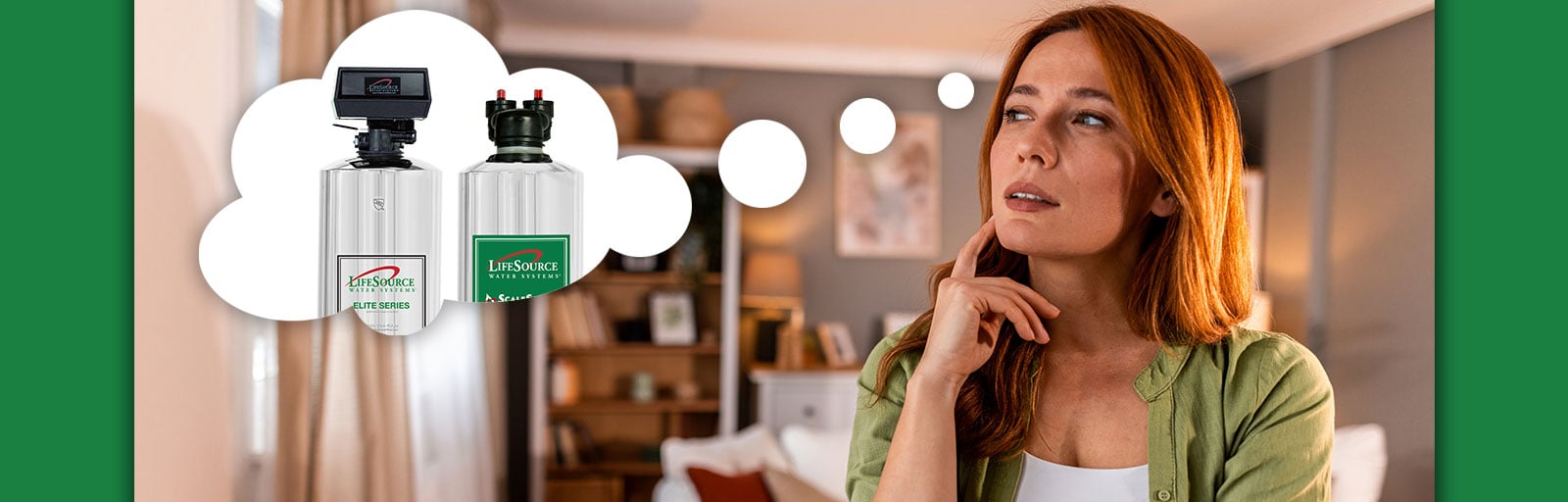
LifeSource's ScaleSolver is a whole house water conditioner installed at your main supply line by our certified teams. It prevents scale throughout your entire plumbing system: water heater, dishwasher, fixtures, and supply-side pipes.
ScaleSolver is also available as part of a combined system that includes carbon filtration for chlorine and chloramine reduction at every tap and shower in your home. One installation point. Every outlet covered.
What homeowners tell us
Homeowners with hard water tell us the difference shows up where they expected it least. Fixtures stay cleaner. Appliances run longer between service calls. The water coming out of every tap is the same water that entered, without the buildup that accumulates quietly over years.
"We just moved into a new house and it's nice to know that we don't have to worry about scale build up in our pipes." — Karrie and Gerald, Camarillo, CA
Which one is right for your home?
It depends on your water and what you're trying to solve. Homes with very high mineral content and a preference for the softening effect may be well-served by a traditional softener. Homes where the priority is scale protection without the salt commitment, and without adding sodium to the water supply, are better suited to conditioning.
A free in-home consultation includes a water assessment and a recommendation built for your home specifically. No commitment required.
Schedule Your Free Consultation