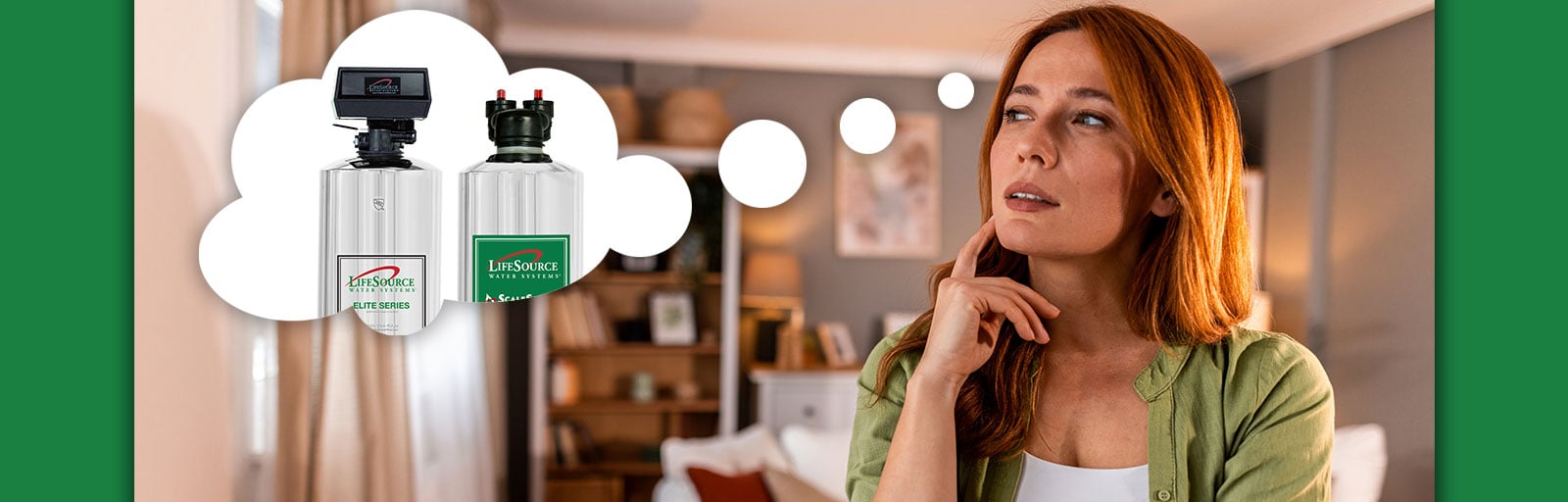
Most homeowners filter the water they drink. Few filter the water they live in.

Most homeowners filter the water they drink. Few filter the water they live in.
One filter vs. whole-home protection: what's actually different?
Most homeowners have a filter under the kitchen sink or a pitcher in the fridge. Both are reasonable starting points. But both treat a single outlet, and your home doesn't run on a single outlet.
A point-of-use filter handles water at one tap. What it doesn't touch: the shower where your family spends ten minutes every morning, the dishwasher running the dinner load, the ice maker, the pipes running water to every faucet in every room.
A whole house water filtration system, also called a point-of-entry (POE) system, treats all incoming water at the main supply line before it reaches any room. One installation. Every tap. Every shower. Every appliance.
Why where filtration happens matters
Chlorine and chloramines, added during municipal treatment, travel through the distribution system and arrive at your home in every water line. A point-of-use filter removes them at one outlet. But your exposure to chlorine doesn't stop at the kitchen tap. It continues through showers, through cooking water, through laundry, at every point where water runs in your home.
Scale-forming minerals take a different path. Calcium and magnesium build up inside water heaters, appliances, and pipes well before water reaches any single outlet filter. Treating one tap leaves the rest of your plumbing untouched.
The entry point is the only place in your home that reaches everything.
What LifeSource installs at your main line
LifeSource combines carbon filtration with salt-free scale conditioning in a single point-of-entry system. Chlorine and chloramine taste and odor are reduced at every outlet. Scale is prevented throughout your entire plumbing system, including supply-side pipes a traditional softener never reaches.
Without salt, without regular maintenance, without compromise.
What families notice after installation
Families tell us they notice the difference throughout the house, not just at the kitchen tap. Better-tasting water at every faucet. Showers that feel different on skin and hair. Appliances that families tell us seem to run more cleanly over time. Every family is different, and results vary, but the most consistent feedback we hear is that families stop thinking about their water.
Families tell us they stop buying bottled water almost immediately. The tap is no longer the compromise option.
"Since the installation of the water system, we have been able to drink the water which we didn't do before. That small drink truly made me appreciate the water we have."
— Irma Garcia, Reedley, CA
The upgrade most families make once
A point-of-use filter solves one problem at one tap. A whole house water filtration system solves the same problem at every tap, plus scale protection, appliance protection, and the confidence that every room in your home runs on the same clean, filtered water.
It is the kind of upgrade families tell us they wish they had made sooner.
Schedule Your Free Consultation
FAQs
1) What is the difference between a whole house water filter and an under-sink filter?
An under-sink filter treats water at one outlet. A whole house system treats all incoming water at the main supply line, before it reaches any room. Every tap, every shower, every appliance. If your concern is chlorine, taste, or scale, the entry point is the only place in your home that reaches all of it.
2) Does a whole house water filter remove chlorine from my shower too?
Yes. Chlorine and chloramines travel through every water line in your home, not just the kitchen tap. Whole house carbon filtration reduces chlorine and chloramine taste and odor at every outlet, including showers. Families tell us the difference is noticeable throughout the house, not just in the glass on the counter.
3) How much maintenance does a whole house water filtration system require?
Minimal regular maintenance. No salt bags, no filter cartridges to swap on a schedule. Our certified teams handle what periodic service is needed. The most common thing families tell us after installation is that they stop thinking about their water.